Kim and Mark’s photos from New Zealand

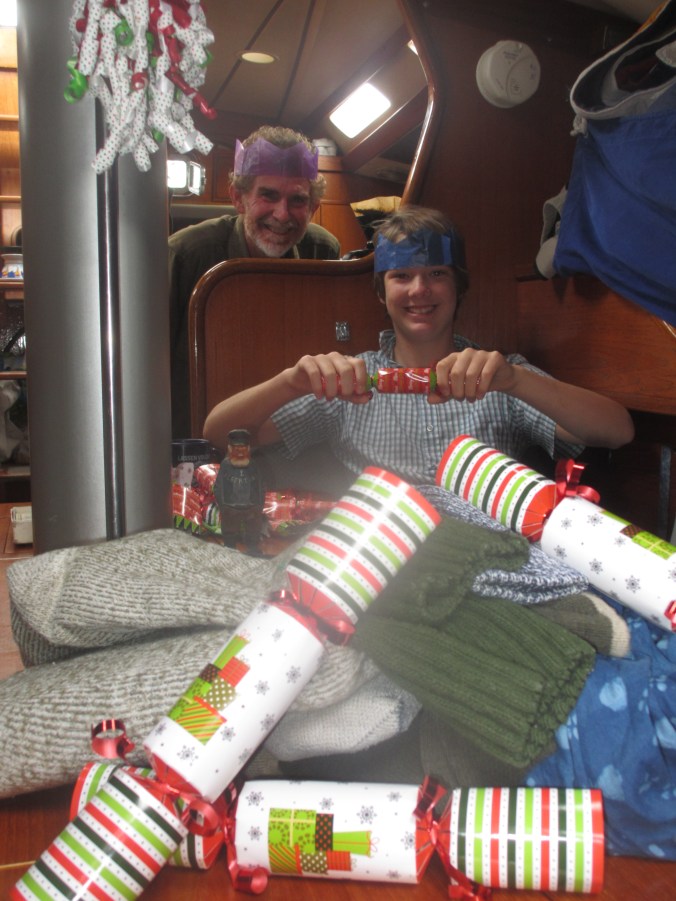
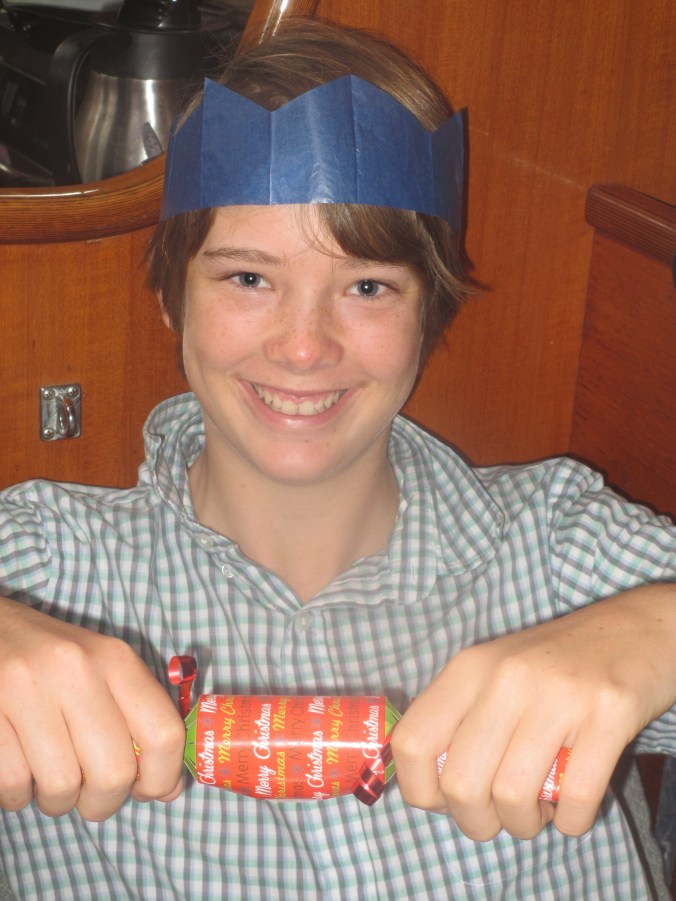
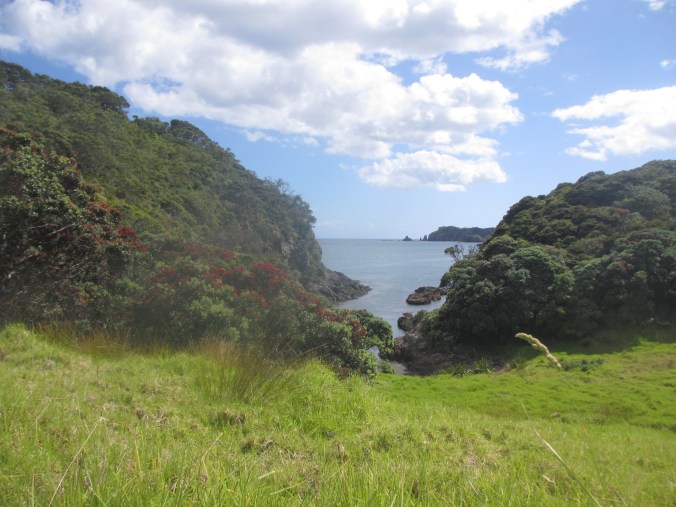
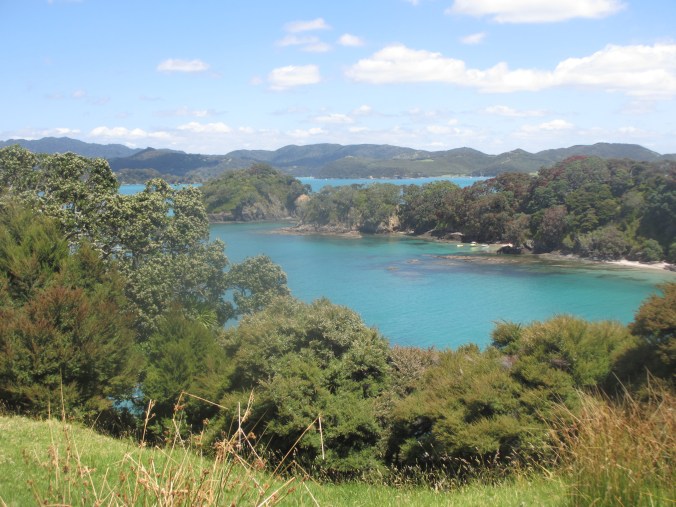
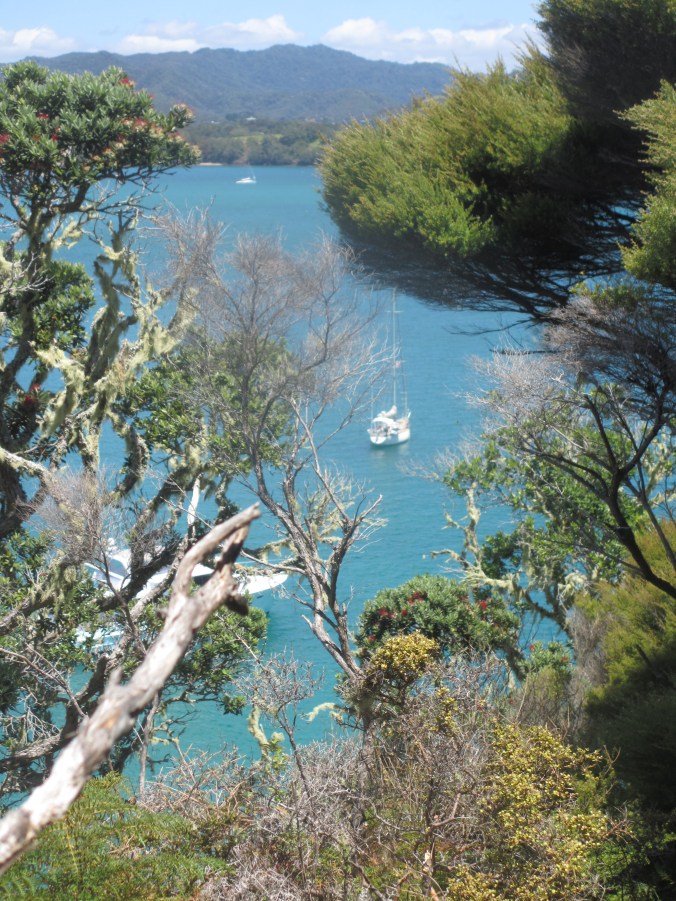
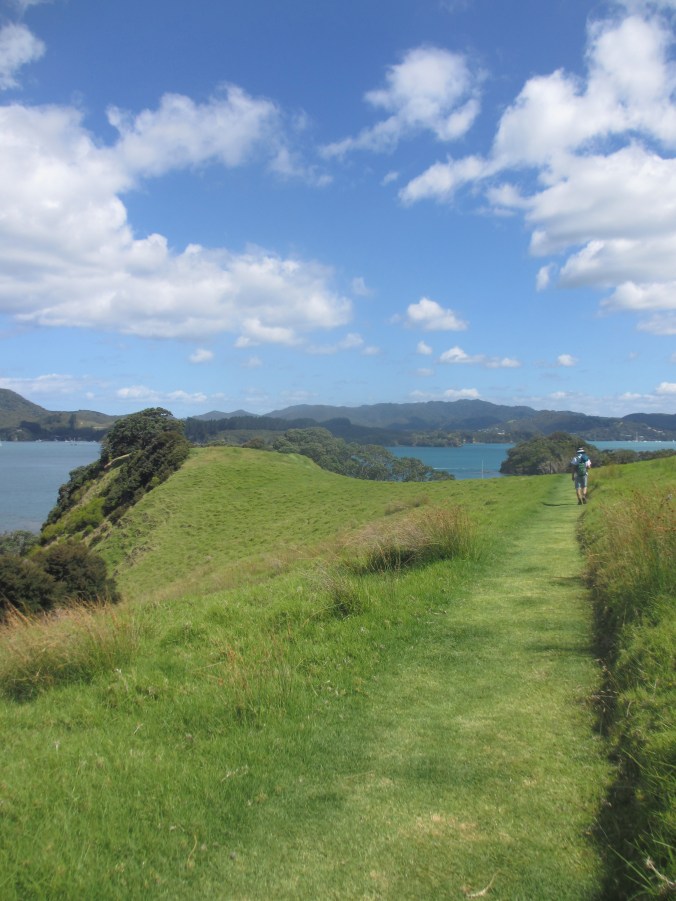
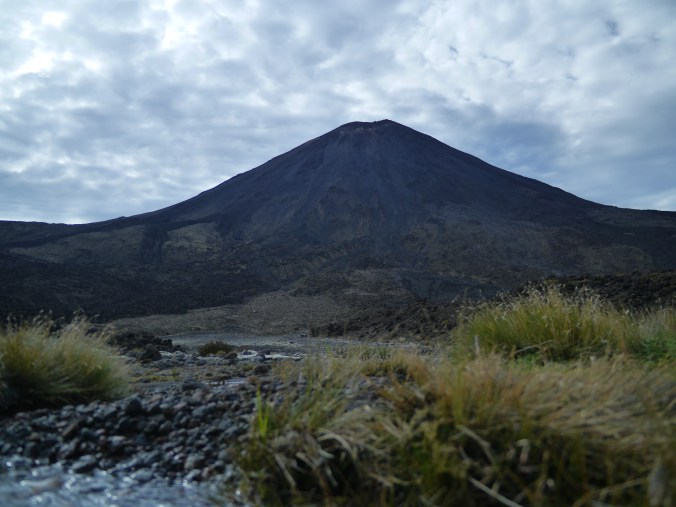
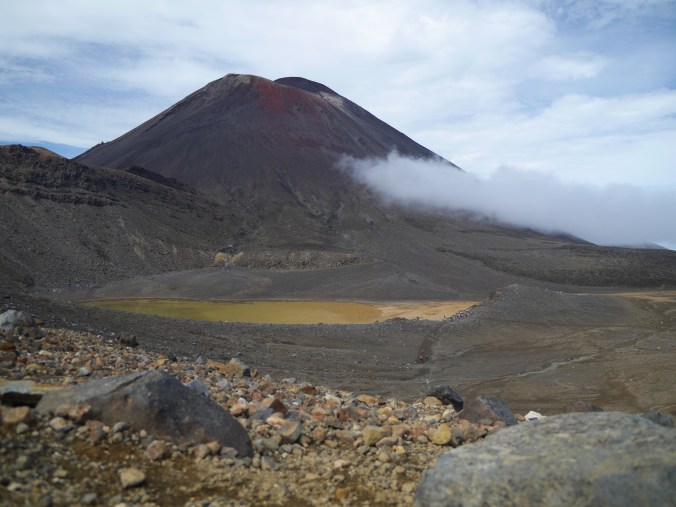
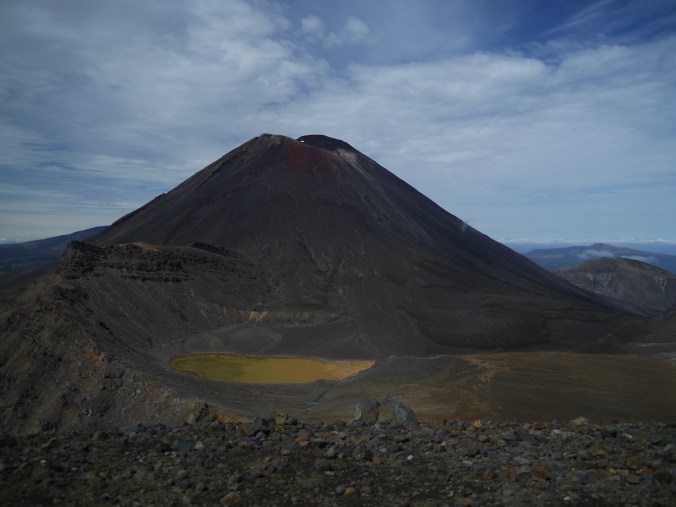
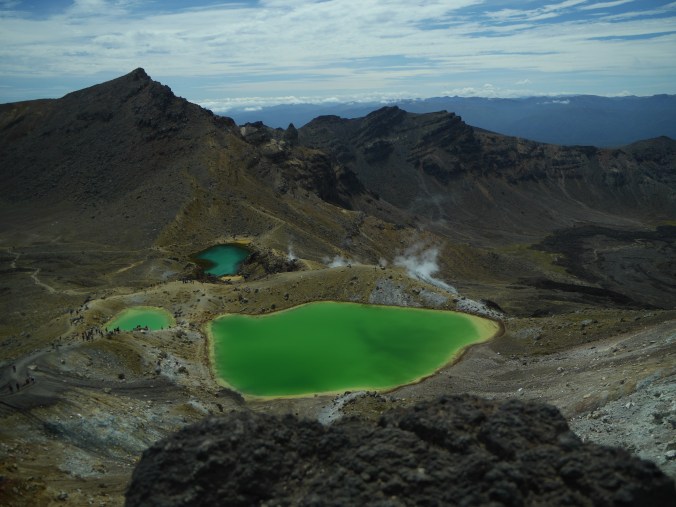
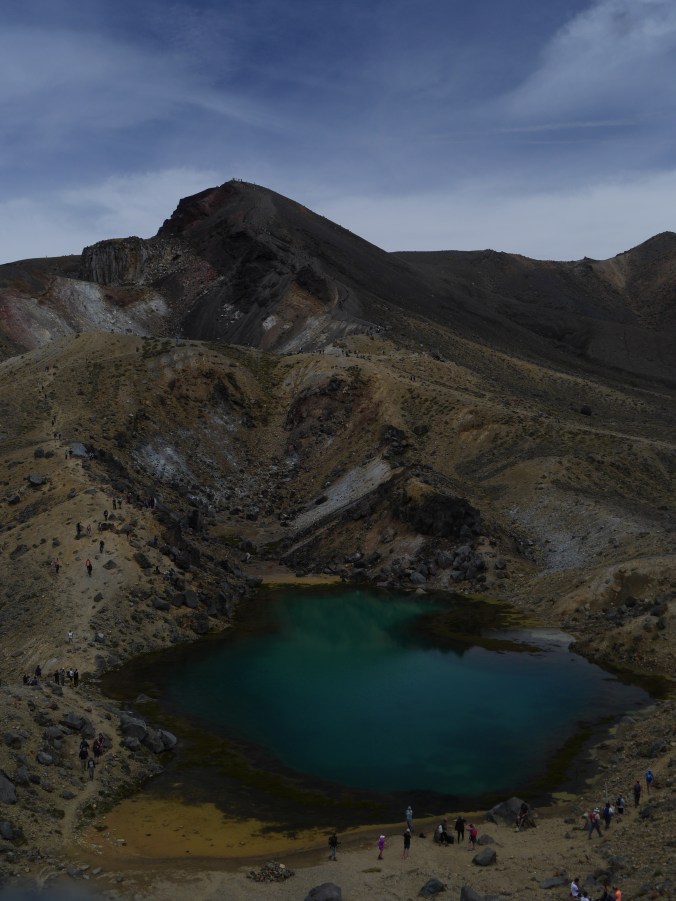
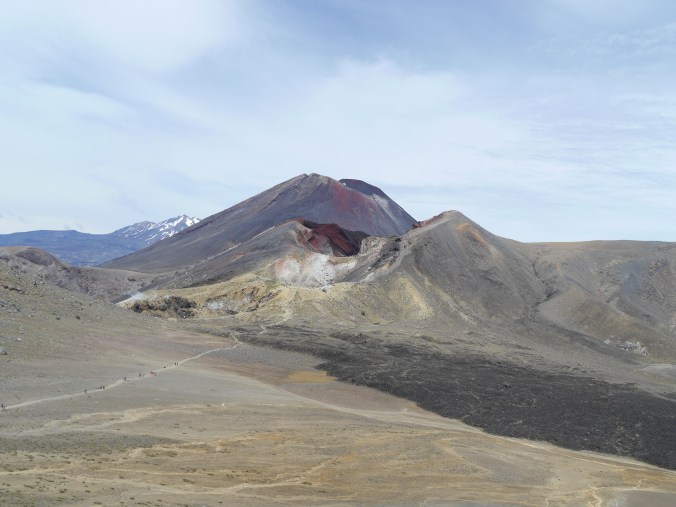
While waiting for the remnants of cyclone Gita to hit New Zealand, we find ourselves in a cozy farm cottage with excellent internet.  So while the wind howls and the rain drips we’re sorting through photos and finally getting them on this blog!  Below you’ll find images from: Anthea in the Bay of Islands, including Christmas aboard; Devon with friends on New Year’s Eve; Lake Waikaremoana backpacking trip with Kathy and Yannai; Tongariro crossing; and sailing down the coast to Poor Knights Islands.

IMG_3299IMG_3300IMG_3304IMG_3309IMG_3324IMG_3327IMG_3344IMG_3355IMG_3356IMG_3359IMG_3367IMG_3440IMG_3441IMG_3452IMG_3460IMG_3463IMG_3473IMG_3488IMG_3514IMG_3517IMG_3526IMG_3538IMG_3541IMG_3547IMG_3550

Soul Food

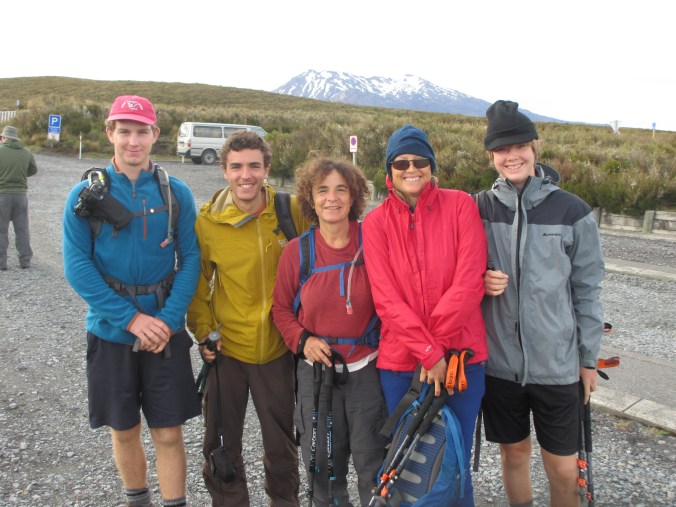
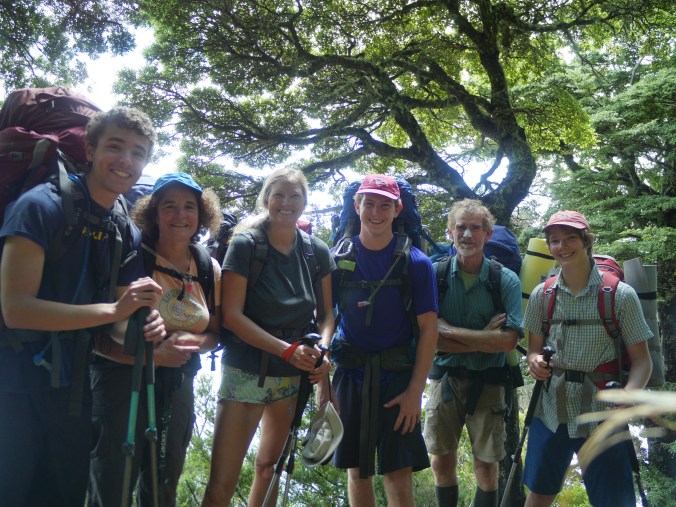
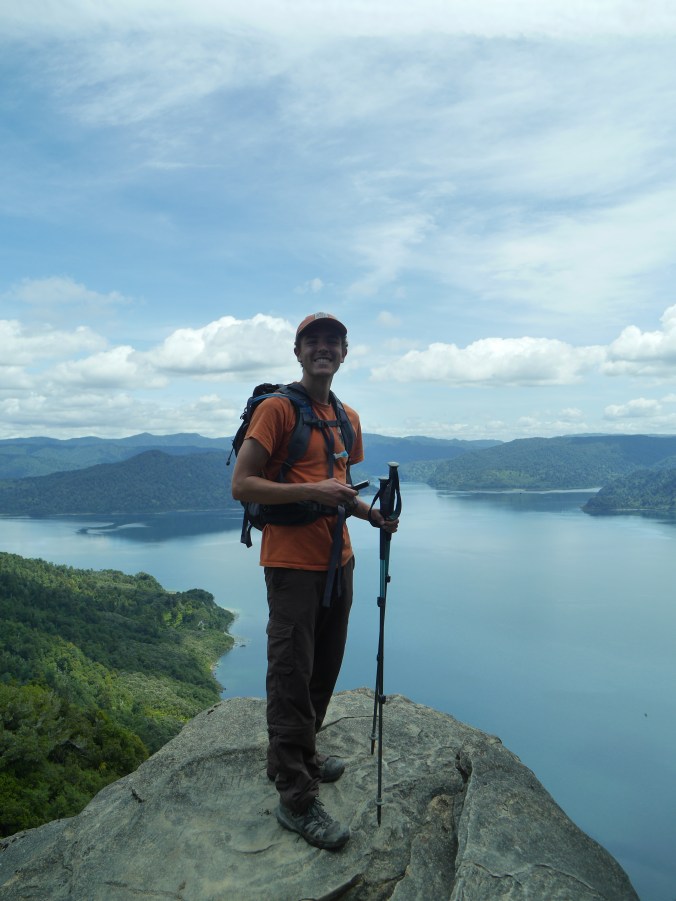
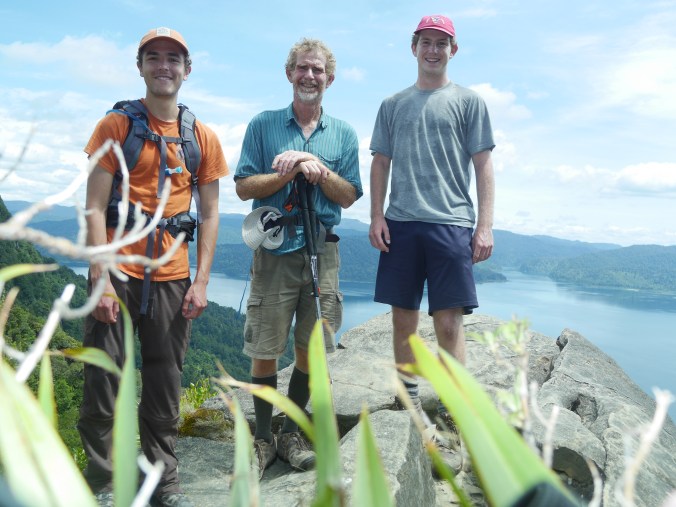
Our leisurely four day backpacking trip in early January around Lake Waikaremoana was excellent food for the soul. First there was the joy of meeting up with Kathy and Yannai, dear friends who planned on joining us in New Zealand from the first moment we shared our dream of this cruise. After so many months insulated in our family dynamics (the good, the bad and the occasionally ugly), and blissfully ignorant of the nuances of the Trump regime, we caught up on lives, love and politics as we slipped and clomped on muddy trails through ancient forest. Kathy is working with friends and community to craft a future based on respect, care and justice, focusing many of these efforts on a swing constituency in the greater Bay Area. Anson and Yannai are born only weeks apart, and they have braided a childhood friendship with their adult passion for chemistry, physics, design and techno-talk, along with reflections on history and politics. Devon finds in Yannai an older brother figure who has remarkable stamina for answering a string of questions, sometimes along one thread of inquiry, but often flitting from topic to topic as fast as birds chasing insects in the evening light.
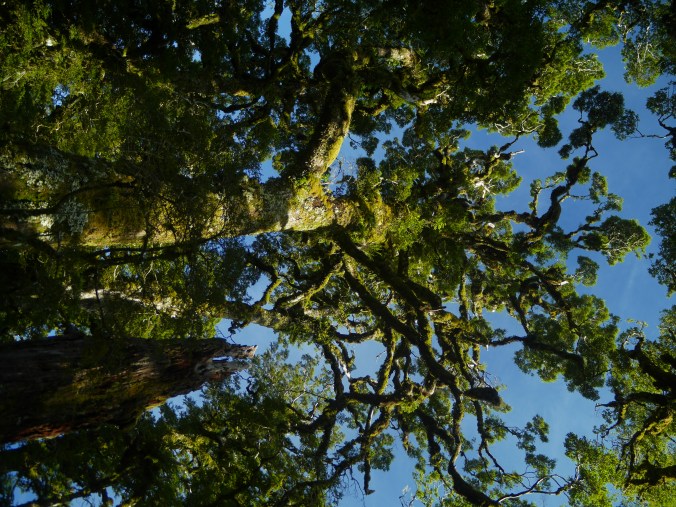
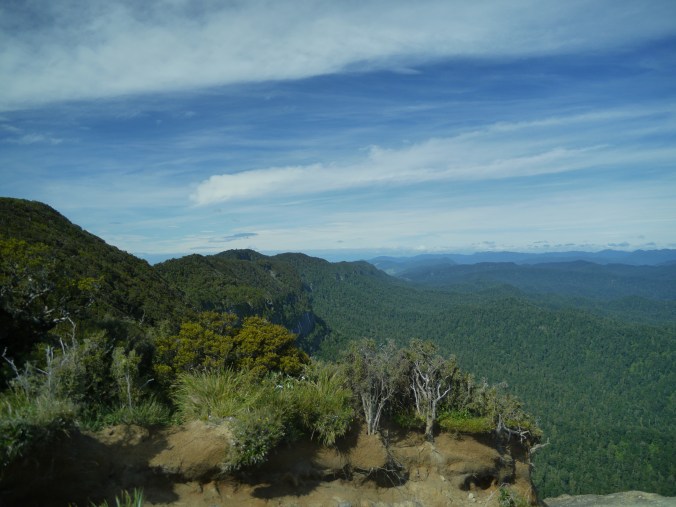
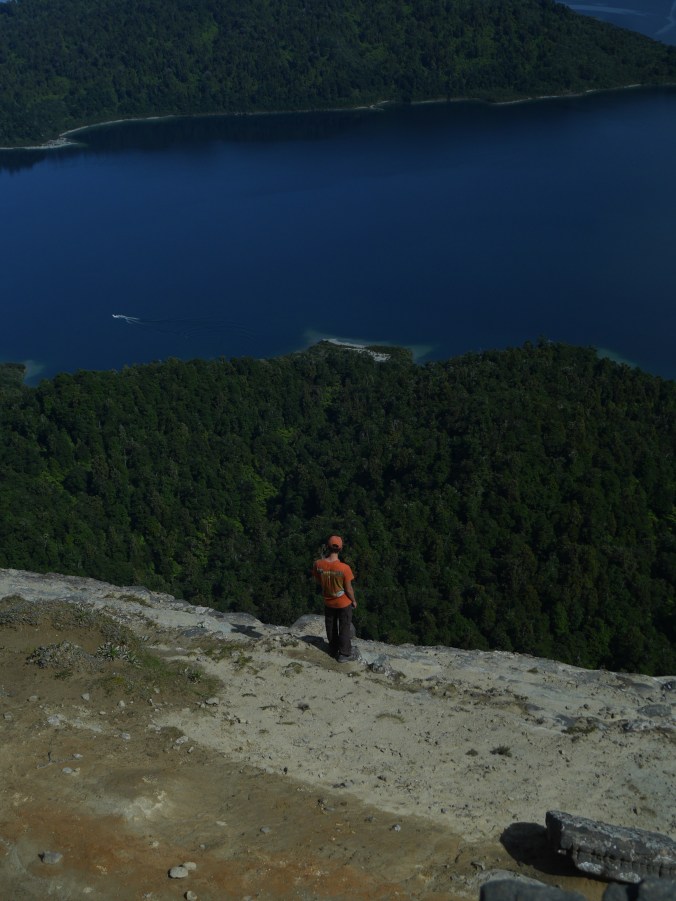
These inner journeys of mind and heart were complemented by the magnificent old growth forest of Te Urewera bordering Lake Waikaremoana, formed by a thousand year old landslide/dam. Our path led up gentle slopes into ancient beech forests, whose massive trunks and spreading branches formed a canopy, filtering light onto the forest floor. Brilliant green fern trees and young rimu/red pine, with thin needle branches hanging like graceful tresses from a narrow crown, dominated the understory, creating fairy-like groves. We dipped down to the lake shore where black swans glided alongside their signets, and occasionally braved the cold waters to plunge and swim. While all was not bliss (we arrived after a sub-tropical storm dumped inches of rain on the track, so we had to slog our way through muddy trails, and we also endured the pesky sand flies who swarmed at lakeside campsites and left welts that swelled and festered), we were nevertheless filled with the awe and grandeur of this old-growth forest, one of the few remaining in all of New Zealand.
At the first hut we learned that this forest was like no other, for the hut manager told us we were hiking within an entity: the Te Urewera forest is the first ever designation of land as a being with legal rights within a modern nation-state. After a leisurely breakfast on our first morning, and finding ourselves the last hikers in the hut, the young woman who managed the facility generously shared the story of her tribe’s 170 year struggle to regain their relationship with their ancestral lands. As one of the few tribes who never signed the Treaty of Waitangi, the Tuhoe people have always had an oppositional relationship with “the crown,” as the NZ government is still referred to. They suffered through decades of land theft and land loss, and endured the ensuing impoverishment of colonialism and neo-colonialism, so evident in the boarded up storefronts and run down homes in rural communities bordering the Te Urewera forest. Using a variety of tactics, the Tuhoe people sustained their activism over a century and a half to redress these injustices, yet, until recently, they met with little success. The landmark legislation of 1975 and 1985, authorizing and giving economic teeth to the Treaty of Waitangi through the establishment of a tribunal, opened the door for redress. In 2013 the Tuhoe signed a settlement with the crown, and in doing so they rejected Euro-centric concepts of land as property and placed their indigenous understanding of the land as a living entity at the center of the document. The accompanying management plan focuses not on managing the land, but on managing the humans to ensure that their interactions respect the entity. The tribe also worked with government departments of education, health and social welfare to draft integrated plans for decolonizing each of these arenas. Plans for hands-on, place-based learning, integrating the knowledge of Western science with the knowledge of the Tuhoe people, form the core of the educational plan. Social welfare shifts the focus from the individual as an isolated unit, to the community as an integrated whole. Hopefully the next decades of work will have the internal and external support and funding necessary to realize the vision laid out in the plan. The final struggle with “the crown” is negotiating a fair transfer of the Department of Conservation (DOC) buildings and infrastructure. These facilities were not adequately maintained by DOC over the years, and the tribe is unwilling to take on the fiscal burden of substantial deferred maintenance.
Inspired by the political victory of the Tuhoe people after such a long struggle, and eager to learn more about the nuances of the legal agreement, I downloaded the Te Urewera-Tuhoe Bill (http://www.legislation.govt.nz/bill/government/2013/0146A/latest/DLM5481230.html). What I saw was vision and accountability: vision of a future based on the wisdom of the past, designating Te Urewera as a legal entity (p. 3); accountability in the fourteen page acknowledgement of specific ways the New Zealand government violated the sovereignty of the Tuhoe people and harmed them, and a complete apology for each violation (pp. 16-30). It gives me hope. It inspires me. It feeds my soul for the political work that we will continue when, all too soon, we step back into the long struggle that so many of you are waging.

Kim

Poor Knights Islands

After weathering a small low pressure system, we proceeded to the Poor Knights Islands. The islands were inhabited by a sub tribe of the Ngatiwai people. Around 1808 the sub tribe refused to let the Hikutu tribe, who had paddled 320 kilometers, to land for trading purposes. Twelve years later the Hikutu attacked, after being informed that the warriors were fighting on the mainland. Three to four hundred people were massacred or taken as slaves. A few hid in the caves and survived to tell the warriors what had happened. They buried the dead and left for the mainland, never to come back. To this day there are remnants, such as old pa sites and stone terraces for houses, of the Ngatiwai people on the islands. In 1977 the islands were declared a Nature reserve.
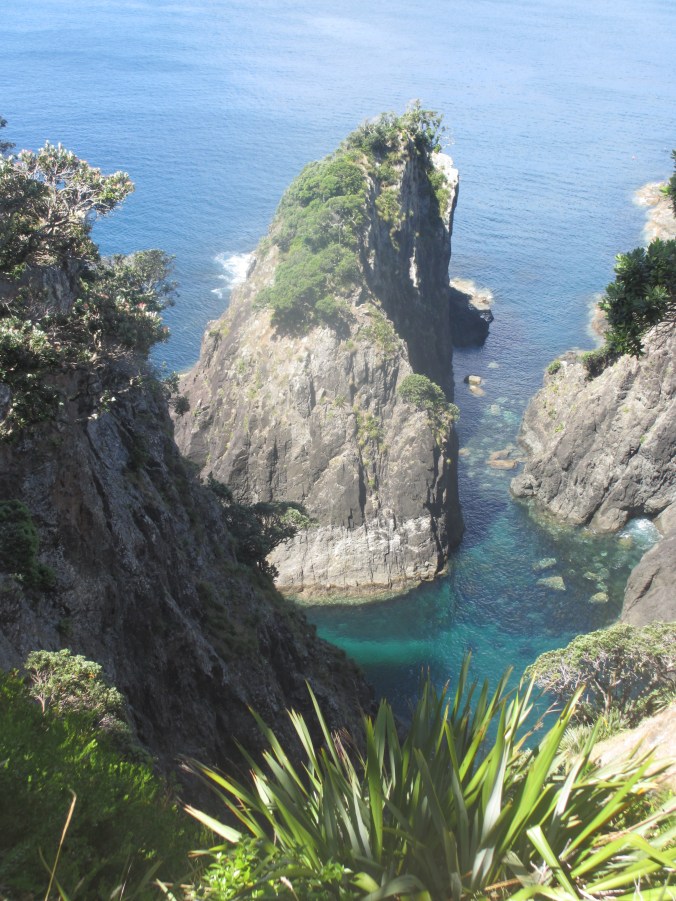
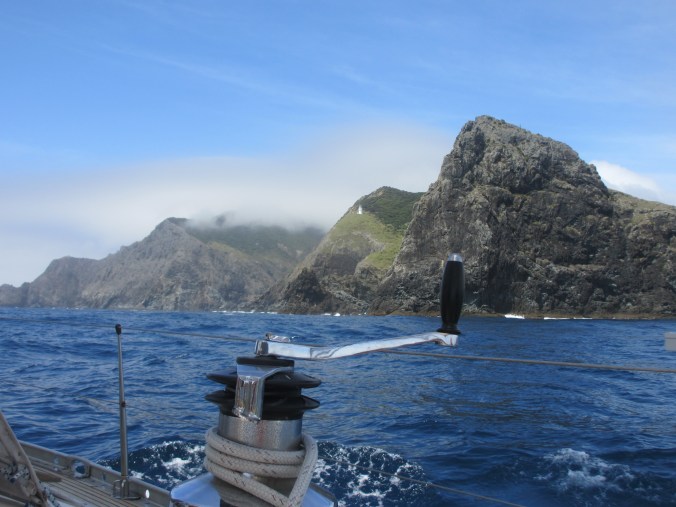
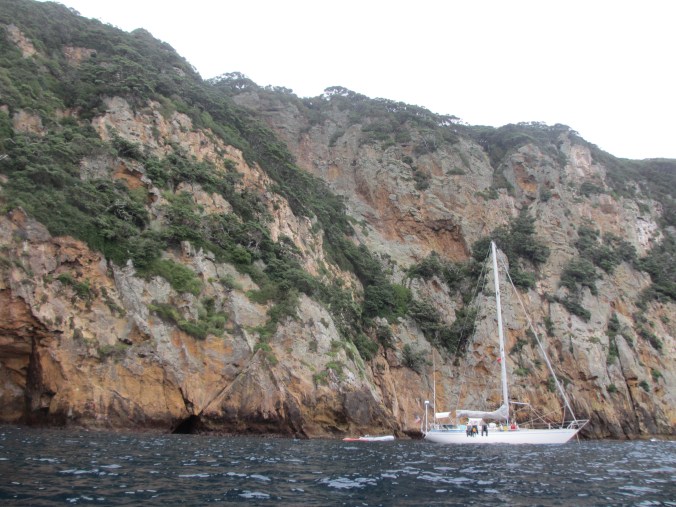
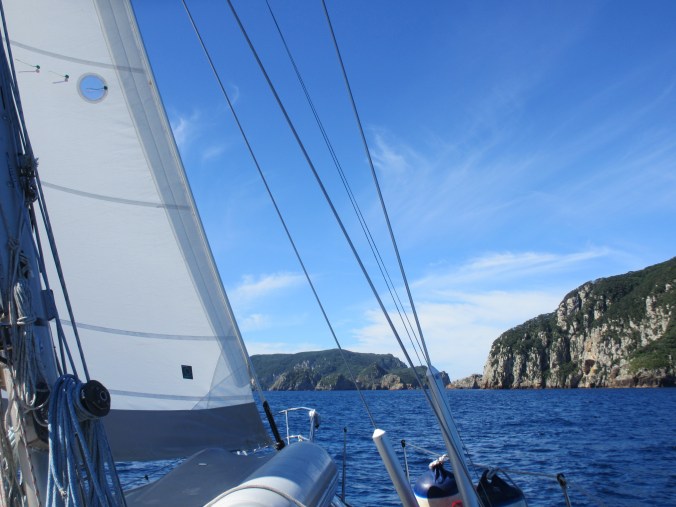
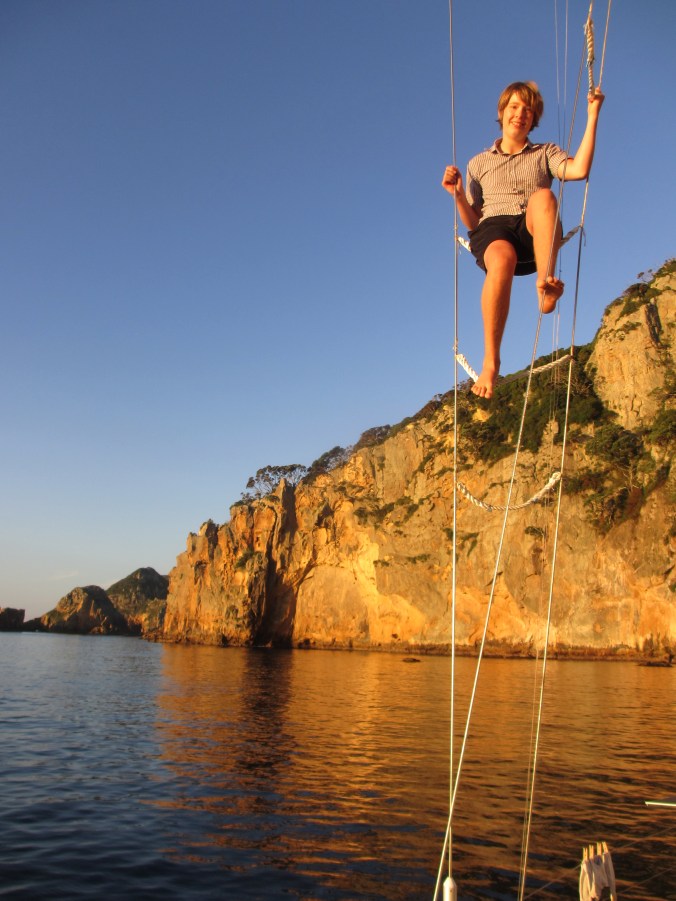
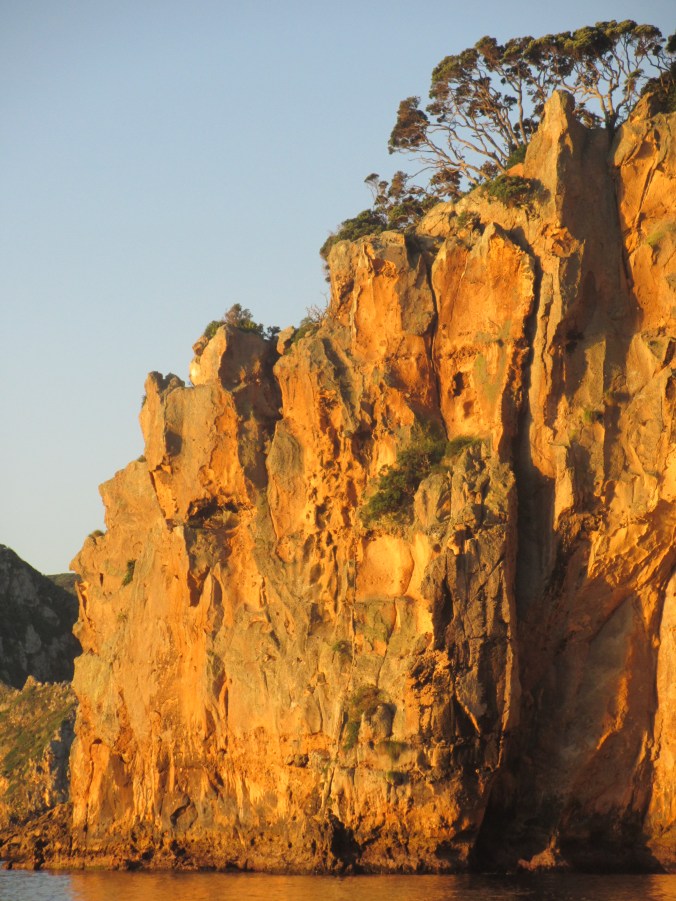
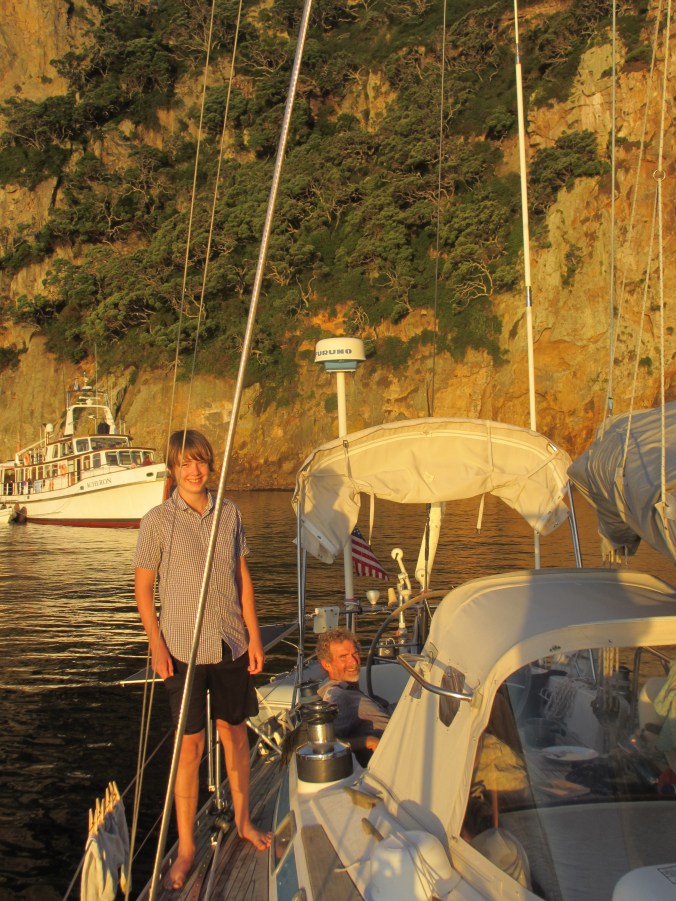
When we arrived on Saturday the 20th the anchorage was empty and rolly, but the dramatic beauty of sheer cliffs topped with green forests, dropping away into blue, fish filled waters ensnared us, and we looked forward to the exploration the next day.

On Sunday we set out in the dinghy to explore the biggest sea cave in the world, Rikoriko, on the west side of Aorangi Island. The cave was formed by a volcanic bubble of air that was opened up by erosion from the sea. The entrance was a big, gaping maw that grew into a large dome as we went further in. When the swell washed through, it hit the edges of the cave, in some spots making small waterfalls and fountaining out of holes in the rock. Blue, green, red, and gold algae covered the cave walls, illuminated by the brilliant light coming from the mouth. There is only so much you can do in a cave, so soon we set out to find a diving spot.

The snorkeling was amazing! The bottom was rocky with patches of sand and a forest of palm kelp covering the sea floor. With each wave the kelp was gently swept to one side, showing new fish, rocks and sponges. Millions of small, translucent zoo plankton were covering the top meter of the surface. They clouded the water and were impossible to not hit. In particularly dense areas I would dive underneath them, and, before coming up, let all my air out, making the bubbles clear the plankton away. The fish were almost as plentiful as the plankton. Huge schools of bait fish swarmed and bigger fish were common, some of them would even come up to us, hanging around as if they were saying, “Feed me, feed me.” We saw Northern Scorpion fish, Groupers, Snappers, Perch, Trevally, Mado, Goat fish, Blue fish, Maomao, Demoiselle, Black Angelfish, Red Pigfish, Wrasse, and Stingrays. Each fish was unique and beautiful, some fat and short, others big with gaping mouths, and lots small and spotted. Together, Anson and I dove through the underwater forest. We sat on the sea bed, followed fish over rocks and around kelp and videoed stingrays gliding. The underwater life was like a dream, and all of us were sad to leave the majestic place the following day. Now we are at Tutukaka to drop Anson off for race week before sailing back out to the islands.

Devon
January 23, 2018